William Tyndale’s English translation
brought the text to ordinary churchgoers.
By Joseph Loconte
ET
To the religious authorities in England in the early 16th century, an obdurate Oxford scholar became a public enemy. Sir Thomas More, who led the hunt, called him a “serpent,” a “son of iniquity” and a “hell-hound in the kennel of the devil.”
The man in question, hiding in Germany, was William Tyndale. His crime was translating the New Testament into English.
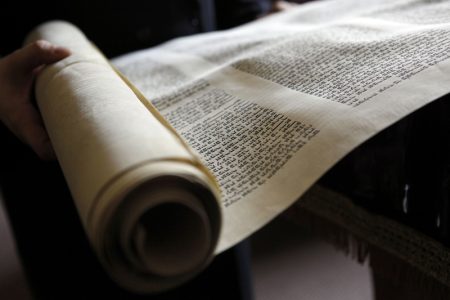
Tyndale’s translation, the first-ever from the original Greek, was smuggled into England in March 1526—five centuries ago this month. For the first time in their history, the English possessed, in their own hands and in their native tongue, the entire New Testament. Tyndale’s text would be the basis for all subsequent English Bibles—and would thus anchor the democratic revolutions of the English-speaking world.
Unauthorized translations of the Bible—it was available only in Latin—were banned in Catholic England, with punishments ranging from imprisonment to execution. Tyndale ignored the law. “I defy the pope and all his laws,” he reportedly told one critic, “and if God spare my life ere many years, I will cause a boy that driveth the plow, shall know more of the Scripture than thou dost.”
Tyndale succeeded with help from profit-minded printers and influential patrons. Anne Boleyn—second wife of King Henry VIII, whom she married as he broke with the Catholic Church—played a key role in the story. She owned a copy of Tyndale’s New Testament and backed appointees to the court who supported the idea of a vernacular Bible.
By 1534, Henry’s bishops were urging the king to authorize a new English translation of the Scriptures to help unify his realm. The result, the “Great Bible”—based largely on Tyndale’s text—was printed in 1539 and ordered to be read aloud in churches throughout the country. Then came the King James Bible in 1611, which incorporated most of Tyndale’s text.
The King James Bible (also known as the Authorized Version) was immediately hailed as a literary masterpiece, thanks largely to the extraordinary quality of Tyndale’s translation. His linguistic gifts and poetic sensibility for the English language, then in its infancy, gave his translation a vibrancy, immediacy, charm and clarity that have never been matched.
The effect of his New Testament was electrifying and empowering, as men and women read or heard aloud the words of Jesus in English for the first time in their lives: “Come unto me, all ye that labor and are heavy laden, and I will give you rest” (Matthew 11:28). “Blessed are the poor in spirit: for theirs is the kingdom of heaven” (Matthew 5:3). “Ye shall know the truth, and the truth shall make you free” (John 8:32).
To ordinary churchgoers, the God of medieval imagination appeared distant and inscrutable. Tyndale introduced the English people to a God who eats with sinners, heals the sick and comforts the grief-stricken: a loving God on a mission to rescue mankind. God no longer spoke a language—Latin—that only a privileged elite could understand. “God had found a voice,” wrote philosopher Roger Scruton, “and the voice was English.”
The democratization of Bible reading, a process begun by Martin Luther in Germany, became a potent force of liberation. Reformers soon wielded the Bible to confront oppressive political and religious regimes. The Protestant defenders of England’s Glorious Revolution of 1689, which deposed an autocratic monarch and established a constitutional government, were armed with a biblical text deeply rooted in Tyndale’s translation.
So, too, were colonial Americans. As the historian Daniel Dreisbach has observed, the King James Bible was “the most accessible, authoritative, and venerated text in early colonial society.” Thus in 1776, even Thomas Paine, a religious skeptic, drew from the Bible to make his famous case for American Independence. “That the Almighty hath here entered his protest against monarchical government is true,” he wrote, “or the scripture is false.”
It was Tyndale’s personal encounter with Jesus in the gospels that caused him to risk everything—exile, shame, poverty, imprisonment—to put the Bible into the hands of ordinary people. He defied the powers of his age—those who sought “to drive you from the knowledge of the scriptures,” as he put it, “to keep the world still in darkness, to the intent that they might sit in the consciences of the people.”
In the end, Thomas More and his informants caught up with the fugitive. On Oct. 6, 1536, Tyndale was strangled to death and his body burned. But his achievement survived the flames: an English-speaking world thoroughly literate in the life and teachings of Jesus. A new message of freedom and redemption, arguably the most liberating event in Western civilization for more than 1,000 years, was on the move.
Mr. Loconte is a presidential scholar at New College of Florida, the C.S. Lewis Scholar for Public Life at Grove City College, and director of The Rivendell Center in New York City. He is the author of “God, Locke and Liberty: The Struggle for Religious Freedom in the West.”